Showing posts with label Andrew. Show all posts

Thursday, 9 April 2015

The grave of Andrew Handyside (1805-1887) and Alexander Buchanan (1829-1916) and other family members.

I have finally located the grave of Andrew Handyside and Anastasia Handyside and other relations.

As you can see its a very basic grave indeed, I imagine the headstone has been placed down for "health and safety gone mad" reasons.
This grave is located in Uttoxeter New Road Cemetery, Derby.

The grave of Andrew Handyside and wife Anastasia.


The inscription in the centre of the cross is IHS which is a Christian church symbol meaning Iesus Hominum Salvatore meaning Jesus Saviour of Mankind.
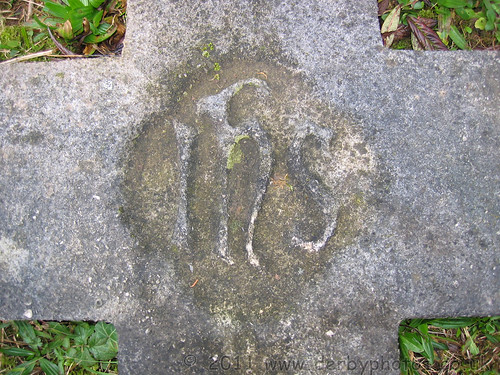
Andrew Handyside's headstone marking.

Andrew Handyside was the son of Hugh Handyside and Margaret Baird.

In the 1871 Census for Derby shows the people living at "The Cedars" as
Andrew Handyside - Head of house - 65 years old - Civil Engineer - Born in Scotland.
Anastasia Handyside - Wife - 48 years old - Born in Babanka, Poland.
Anastasia Henley - Mother in law - 88 years old - Born in Russia, St Petersburg.
Jane Ruddle - Servant Cook - 27 years old


Anastasia Henley was Anastasia Handyside's Mother (Andrew Handyside's Mother in law). She was born in St Petersburg on December 9th 1782 and died of bronchitis the age of 92 on February 17th 1875.
Her husband was John Henley who from St Petersburg born on February 7th 1767 and died on July 1st 1855.

In the 1881 Census for Derby shows the people living at "The Cedars" as
Andrew Handyside - Head of house - 75 years old - Civil Engineer (Retired) Born in Edinburgh, Scotland.
Anastasia Handyside - Wife - 58 years old - Born in Babanka, Ukraine, Poland.
Eleanor Haverfield - Grand niece - 10 years old - Scholar - Born in Callander, Scotland
Ann Webb - Servant - 29 years old - Cook - Born in Arley, Shropshire
Emma Ault - Servant - 29 - Housemaid - Born in Derby, Derbyshire. 


Anastasia Handyside  Death Certificate
Registration District  Kensington
Sub-district Kensington North in the County of London
When and where died:  16th Nov 1910, 50 St Marks Road, North Kensington
Name and Surname:  Anastasia Handyside
Sex:  Female
Age: 89 years
Occupation: Widow of Andrew Handyside, Civil Engineer
Cause of Death:  Syncope following shock the result of a fracture of the femur caused by a fall Accidental
[Syncope – fainting, loss of consciousness from fall of blood pressure – Concise OED]
Signature, description and residence of informant:  Certificate received from C Luxinoore Drew [?] Coroner for London Inquest this day 19th Nov 1910
When Registered: Twenty First November 1910
I would like to thank Peter Butt for the above information.

Anastasia Henley  Death certificate
Registration District:  Saint Peter, Derby.
When and Where died:  17 February 1875, The Cedars, Ashbourne Road
Name and Surname:  Anastasia Henley
Sex: Female
Age: 92 Years
Occupation: Widow of John Henley a Merchant
Cause of Death: Gradual decay – Bronchitis, certified by HW Baker MRCS
Signature, description and resident of information:
Emily Buchanon, Daughter of deceased, present at death, 8 Wilson Street, Derby
When registered:  18 Feb 1875

Andrew Handyside - Will
Made in 1877
Andrew left everything to his wife and sole executor Anastasia for her sole use.
In the case of Anastasia dying before him then to his niece Louise for her sole use and as sole executor.

In this plot are....
Andrew Handyside - Age 81 Interment date 13th June 1887
Anastasia Handyside - Age 87 Interment date 21st November 1910

Andrew Handyside died on Thursday 9th June 1887 from bronchitis.

Andrew Handyside was seventeen years older than his wife, Anastasia's mother was also called Anastasia and was born in St Petersburg (now Leningrad) both became British subjects.
According to the register, Andrew Handyside paid for this plot in advance !

While hunting for the gravestone of Andrew Handyside I found the plot for Alexander Buchanan. Alexander was Andrew Handyside's Nephew and also a manager at the Britannia Iron Works in Derby.

The gravestone details:
Alexander Buchanan 1829-1916
Emily Buchanan 1827-1912

This grave is located in Uttoxeter New Road Cemetery, Derby.

The grave of Alexander Buchanan (Nephew of Andrew Handyside)


Uttoxeter New Road Cemetery, Derby
This graveyard is rather large and very heavily populated with plots so it took several visits to locate it. Because the grave stone is on its face I had no choice but to identify it using adjacent plots.

Uttoxeter New Road Cemetery, Derby tilt-view.


Thanks
Andy
Follow me on Twitter for latest info on Andrew Handyside and Friar Gate Bridge:
https://twitter.com/andysavage1969


Thursday, 1 March 2012

Old Drinking fountain Alum Chine, Westbourne, Bournemouth, UK built by Andrew Handyside in the 1880s

Andrew Handyside who made Friar Gate bridge in Derby also made lots of fountains. These fountains were made right here in Derby at the former Britannia Ironworks on Duke Street.

The Britannia Foundry's work was well known throughout the Victorian Era for its fine quality, so these fountains can be found all over the globe but where exactly they are located is difficult to find out. But thankfully because of my extensive research here, people are beginning to contact me with details of Handyside work. I am then able to add it to my Handyside world map and this blog, where I can go into great details about every item I find including historical information, Photographs from Flickr, Videos from Youtube, Exact map locations, Google Streetviews etc.

Here is one that I found last year but was waiting for someone to take some better photographs of it for me, thankfully Alwyn Ladell from Bournemouth has now taken some great shots of it which I can now share.
This Disused Drinking Fountain by Andrew Handyside is located on the beach at Alum Chine, Westbourne, Bournemouth, Dorset, UK.

This particular design of drinking fountain is listed as Design Number 24 on Page 42 of the 1879 publication "An Illustrated book of Designs for Fountains and Vases, costing from £1 to £1200 manufactured by Andrew Handyside".
The price for this fountain is listed in April 1880 as between £18 0s 0d and £20 5s 0d depending what finish was applied (no finish, bronze/marble paint etc).
According to the drawing its 6 foot 7 inches from the base to the bottom of the lamp support and includes a animal drinking trough in the base. Looking at the photographs of this fountain it does still have those on place unlike the Curling Drinking fountain in Eastbourne.

Its a real shame that this Victorian drinking fountain has been allowed to get into this sorry state.
This is probably around 140 years old and has been left to rot. I'm very surprised that this has been allowed to happen, perhaps the council don't realise what they have here! Is it even listed? 
Perhaps if you live in this area you should let someone who cares know about this neglected fountain.

This fountain is missing the water spout, the two cup holders and the lamp on the top. It DOES however still retain the Handyside plaque which the Eastbourne fountain does not.

Photographs of this old drinking fountain.

Front view of the drinking fountain showing the two intertwined dolphins on the top, Looks like the lamppost has rotted away.
Disused Drinking Fountain by Andrew Handyside, Alum Chine, Westbourne, Bournemouth, Dorset

Angled view of the fountain, at this angle you can see one of the animal drinking troughs in the base.
Disused Drinking Fountain by Andrew Handyside, Alum Chine, Westbourne, Bournemouth, Dorset

The "A. Handyside & Co Ld" plaque located at the top of the fountain just below the dolphins.
Disused Drinking Fountain by Andrew Handyside, Alum Chine, Westbourne, Bournemouth, Dorset

The Handyside logo located on the ??????? of the fountain.
Disused Drinking Fountain by Andrew Handyside, Alum Chine, Westbourne, Bournemouth, Dorset

Photograph of the fountain from 2009 by Martin R :
bournemouth & boscombe sea front

A Postcard from 1926 showing the fountain, probably in working at this time :
Alum Chine estuary, Westbourne, Bournemouth - eastern cliffs and steps

I found another photograph of this fountain on Geograph.

This exact same model of drinking fountain in great condition can be found in Eastbourne, see my blog post on this other fountain here - Eastbourne fountain.


Map Location:
View my Andrew Handyside World Map to see the exact location of this fountain on my world map.
My world map is the result of hundreds of hours of research into the company, plotting out each item as I find it.

Can you help find more Andrew Handyside stuff ?
If anyone out there knows of any other Fountains around the world bearing the Handyside badge that I have not mentioned yet then please get in touch with details, location, photographs etc.

Thanks
Andy

Saturday, 25 February 2012

Chapelfield Road and Union Street viaducts for Manchester Piccadilly railway line built by Andrew Handyside around 1840.

The Derby firm Andrew Handyside who made Friar Gate bridge in Derby also made many hundreds of other bridges of many different sizes around the world. Here in my dedicated blog to this company I am detailing every item I can find manufactured by them.
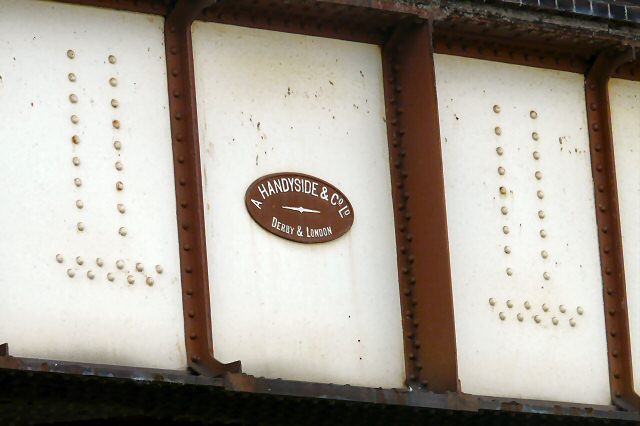
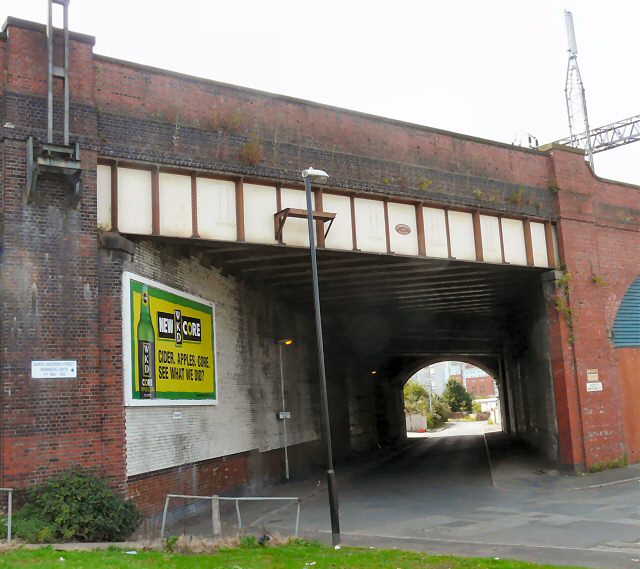
In Manchester there are many viaducts that cross roads leading into Manchester Piccadilly Railway Station. Some of these viaducts have the plaque "A. HANDYSIDE & Co Ld Derby & London".
Thanks to Google Streetview its possible to wander around these viaducts to inspect them for Handyside plaques.
I have managed to find two that still have the plaques. These are over Chapelfield Road and Union Street. I dare say some of the other viaducts into this station may well have been made by Handyside but the badges have fallen off.

Manchester Piccadilly (Manchester London Road until 1960) is the principal railway station in Manchester,
The station opened on 8 May 1842 as Store Street station and as Bank Top station, The station was then renamed London Road station in 1847, London Road station. It was then renamed yet again to Manchester Piccadilly when it reopened after reconstruction on 12 September 1960.

Handyside plaque on the viaduct carrying the railway lines into Manchester over Chapelfield Road.


Chapelfield Road Under the viaduct leading to Piccadilly Station


Google Streetview:
The Google streetview car has captured this location well and you can clearly see the Andrew Handyside plaque on the ironwork. See it HERE.
Also the plaque on Union Street viaduct too HERE.

Map Location:
View my Andrew Handyside World Map to see the exact location of this bridge on the world map.
My world map is the result of hundreds of hours of research into the company, plotting out each item as I find it.

Can you help find more Handyside stuff ?
If anyone out there knows of any other bridges around the world bearing the Handyside badge that I have not mentioned yet then please get in touch with details, location,photographs etc.

Thanks
Andy

Wednesday, 25 January 2012

Fountain in Pearson Conservatory, St. Georges Park, South Africa, Made By Andrew Handyside about 1882.

Andrew Handyside who made Friar Gate bridge also made lots of decorative fountains. These fountains were made right here in Derby at the Duke Street Foundry "Britannia Iron Works". Andrew Handyside exported many decorative fountains around the world during the Victorian era.  The Britannia Foundry's work was well known for its fine quality so these fountains can be found all over the globe but where exactly they are located is difficult to find out.

Here is one I found last year but decided now was a good time to post about it due to the fact that I've just seen it in the background of a TV Advert !!!
This Handyside fountain is located inside the Pearson Conservatory, St. Georges Park, South Africa. It was made in Derby around 1882.

This particular design of fountain is listed as Design Number 15 on Page 30 of the 1879 publication "An Illustrated book of Designs for Fountains and Vases, costing from £1 to £1200 manufactured by Andrew Handyside".  Its the same design as the one at Prince Alfred College, Adelaide, Australia. and the one at Sarmiento School Fountain in San Miguel de Tucuman, Argentina, South America.

Photograph of the Handyside fountain :


The TV Advert for Truvia sweetener that features this fountain.

The advert was filmed in St. Georges Park, South Africa, the advert is set in a greenhouse originally brought from Scotland in 1882. Filled with hundreds of locally grown Stevia plants, the scene brought beauty and nature together in perfect syngery. In the advert Ebony Buckle, a classically trained singer takes centre stage as she sings ‘Truvia® Scrumptious’ to the tune of Chitty Chitty Bang Bang’s iconic ‘Truly Scrumptious’.

Map Location:
View my Andrew Handyside World Map to see the exact location of this fountain on the world map.
My world map is the result of hundreds of hours of research into the company, plotting out each item as I find it.

Can you help find more Andrew Handyside stuff ?
If anyone out there knows of any other Fountains around the world bearing the Handyside badge that I have not mentioned yet then please get in touch with details, location, photographs etc.

Thanks
Andy

Friday, 6 January 2012

Former New Brighton Tower, Wallasey, Merseyside, UK Built by Andrew Handyside in 1896 (now Demolished).

NOTE : This no longer exists! It was completely demolished in 1919.

Update : October 2022, Darren of the YouTube channel AdventureMe has made a really interesting and details video about this wonderful structure, highly recommend you watch it :

You may have seen this on Episode 7 of the BBC2 TV Series "Britain's First Photo Album - Liverpool to Blackpool" shown on Tuesday 20th March 2012.

Did you know that Andrew Handyside who made Friar Gate bridge in Derby also made the Structural steelwork and cast-ironwork for many buildings around the world and they were made right here in Derby at the Britannia Ironworks.

The New Brighton Tower was inspired by the Eiffel Tower (Paris, 1889) and built as the centre of a popular amusement park and pleasure garden. Located near Liverpool in Wallasey, Merseyside.

At the time, this was the highest structure in England !

It was begun in 1896, finished about 1900 at a cost of £120,000. The architects were Maxwell and Turk of Manchester

According to my 1904 guide published by Andrew Handyside the tower was 574 Foot high (From the ground to the top of the Cooper Ball on the flag-staff) and the base was 143 foot wide.

The weight of Steel used in the Tower is 1,760 Tons
The weight of Steel in the buildings surrounding the tower is 650 Tons.
Handyside designed it with an octagonal cross-sectional design unlike the simple square plan used on Blackpool Tower (518 feet, built 1894).

In the building which surrounded the base of the tower was a ballroom and other popular assembly spaces.

The tower had four lifts to take sightseers to the top of the structure at a cost of 6d.
From there you could see for miles around including the Isle of Man, part of the Lake District and the Welsh Mountains. The Tower attracted a half a million people in its opening year.
During the first world war the steel structure was neglected and became rusty through lack of maintenance and the cost of renovating was more than the owner could afford.

The top portion of the structure commenced to be dismantled on 7th May 1919 and was completed by June 1921 (see the photographs below)
The brick portion comprising of the Ballroom and Theatre remained, together with the turrets. During the Second World War the basement was used as a communal air-raid shelter.
The remaining parts of the surrounding buildings were destroyed by fire in 1969, the entire area was redeveloped as River View Park. Nothing remains of this site.


Photographs of this Victorian Tower built by Andrew Handyside.

new brighton tower - tallest building in england in 1897
Photograph by Noctorum.

Photograph by Andrew Handyside at the time of construction of the lower section of the tower from 1897 :


1912 Souvenir Guide for the New Brighton Tower and Amusement Park.
New Brighton Tower Guide page 1
Photograph by Noctorum.

New Brighton Tower Guide Cover.
New Brighton Tower Guide
Photograph by Noctorum.

Photograph showing the tower during its demolition 1919-1921.
New Brighton Tower Wallasey, dismantled between 1919-1921-03
Photograph by Les Ward.

A video "Wallasey - New Brighton Tower's Rise & Fall"
From 1897 to 1969, when the Tower met its final demise. This short pictoral history video captures what has gone and in many ways been forgotten.

Video by Parapiranha.

Learn more about New Brighton Tower here :
http://www.liberator31.co.uk/wallasey/towergrounds/index.html


My Reference :
Page 38 of Steel & Iron Structures Made and erected by Andrew Handyside & Co Ltd of Derby and London. Published 1904.

Map Location:
View my Andrew Handyside World Map to see the original exact location of this tower on my world map.
My world map is the result of hundreds of hours of research into the company, plotting out each item as I find it.

Can you help find more Andrew Handyside stuff ?
If anyone out there knows of any other items around the world bearing the Handyside badge that I have not mentioned yet then please get in touch with details, location, photographs etc.

Thanks
Andy

Sunday, 1 January 2012

Drinking fountain in St Pancras Old Church Gardens built by Andrew Handyside in 1877.

Andrew Handyside who made Friar Gate bridge also made lots of decorative fountains. These fountains were made right here in Derby at the Duke Street Foundry "Britannia Iron Works".

Andrew Handyside exported many decorative fountains around the world during the Victorian era.
The Britannia Foundry's work was well known for its fine quality so these fountains can be found all over the globe but where exactly they are located is difficult to find out.
Thankfully because of my research here people are beginning to contact me with details of Handyside work, I am then able to add it to my world map. It really helps my research being able to use Flickr to see these items for myself and share these finds with the world.

This drinking fountain is located in the gardens of St Pancras Old Church, London.
Dated 1877 on plaque. Manufactured by Andrew Handyside and Co of Derby for William Thornton, a
senior Church Warden who presented it to the church.

This particular design of fountain is listed as Design Number 48 on Page 40 of the 1879 publication "An Illustrated book of Designs for Fountains and Vases, costing from £1 to £1200 manufactured by Andrew Handyside".

There is another of these fountains and in much better condition in Australia.
See my post : Belcher Drinking Fountain in Geelong, Victoria, Australia.

Photographs of this fountain.

View of the fountain in the Church gardens.
Handyside drinking fountain at St Pancras Old Church, London

View of the top of the fountain.
Handyside drinking fountain at St Pancras Old Church, London

The makers badge on the base of the fountain.
Handyside drinking fountain at St Pancras Old Church, London

Showing the location of the fountain within the church gardens


Handyside drinking fountain at St Pancras Old Church, London


Google Streetview of this fountain.

Map Location:
View my Andrew Handyside World Map to see the exact location of this fountain on the world map.
My world map is the result of hundreds of hours of research into the company, plotting out each item as I find it.

Can you help find more Andrew Handyside stuff ?
If anyone out there knows of any other Fountains around the world bearing the Handyside badge that I have not mentioned yet then please get in touch with details, location, photographs etc.

Thanks
Andy

Friday, 4 November 2011

Footbridge at King's Cross Railway Station, London was made by Andrew Handyside in 1892.

The Derby firm Andrew Handyside who made Friar Gate bridge in Derby also made many hundreds of other bridges of many different sizes around the world such as this world famous footbridge which up until December 2008 was located in King's Cross Railway Station, London, UK.

As well as King's Cross footbridge, this bridge has many other names such as The Harry Potter Bridge, Handyside bridge.

Update for June 2013 : This bridge is now open at Ropely, Hampshire. See my video here.

King's Cross Footbridge is a Grade I listed structure built in Derby in 1892 by Andrew Handyside and installed at Kings Cross in 1893.

In 2008, as part of a major redevelopment of Kings Cross, the footbridge had to be dismantled and removed. English Heritage and the London Borough of Camden, as Planning Authority, stipulated that Network Rail should find a suitable alternative use for the footbridge. This alternative use has now been found at Mid-Hants Railway, Watercress Line, Alresford, Hampshire.

www.watercressline.co.uk

The Handyside footbridge used to run across the main station train shed, between platform 1 on the E side and platform 8 on the W side. This structure, approximately 66m long, and is made of composite lattice girders with diagonal straps and it is supported by cast iron columns with octagonal bases on all platforms except on platforms 7-6. Although it only linked platforms 1 and 8, the presence of gates within the south parapet in line with the intermediate platforms suggest staircases were once present to allow access to these.

A clock was situated directly over platform 8, with two large clock faces, to N and S, fixed above the faces of the bridge, driven via a rod by a clock mechanism housed inside the W range of buildings nearby. The West side of the footbridge was constructed in 1892 and has makers plates "A. Handyside & Co. of Derby and London" The East half of the bridge looks like an addition, or else a replacement. Perhaps the western half, if built first,was to connect only departure platforms, which the clock would also have served, when trains arrived at and departed from different platforms in the two halves of the station.

A new hope for the Handyside footbridge.

Currently (Nov 2011) the bridge is being shot blasted and will be installed at a heritage railway site in Mid-Hants. The plans for the bridge are based on 1/2 the bridge crossing the Mid Hants Railway’s main line, yard shunt road and two tracks into a new workshop i.e. 4 in total, with the second half creating a walkway from the end of the first bit to the entrance to viewing galleries in the workshop where we will place most of the interpretation materials. It could well be 6 months before this is complete.

I would like to thank David Snow and Elissa May at Mid Hants Railway watercressline for their help and information.

Harry Potter and the sorcerer's stone :

On this footbridge is where Hagrid was filmed giving Harry his first Hogwarts Express ticket in the well known 2001 film Harry Potter and the Sorcerer's Stone.

For many years the trellis lattice work was covered along the inside of the bridge by fiberglass panels, these were removed for the film. Fans of Harry Potter used to visit this bridge so they could stand where Harry was when he was given his special ticket. See my images lower down of this bridge as seen in the Harry Potter film.

Photographs

Long Panoramic photograph of the entire King's Cross footbridge when it was still in location.

Kings Cross, London

Kings Cross Section

Kings Cross Station (Harry Potter)

"A. Handyside" makers plaque on the stairs in Kings Cross Station.

for niznoz

A Handyside badge on one of the footbridge supports.
Handyside badge on King's Cross footbridge support

Video
A time-lapse video showing the removal of this footbridge in 2008


King's Cross bridge removal time-lapse from NCE Magazine on Vimeo.

Handyside bridge as seen in the Harry Potter film:

King's Cross Footbridge Harry Potter 1

King's Cross Footbridge Harry Potter 2

King's Cross Footbridge Harry Potter 3

Photographs of the bridge in its new location:
Awaiting restoration before installation at the Watercress line.
view at Eastleigh showing sections of balustrade

Map Location:
View my Andrew Handyside World Map to see the exact location of this bridge on the world map.

My world map is the result of hundreds of hours of research into the company, plotting out each item as I find it.

Can you help find more Handyside stuff ?

If anyone out there knows of any other bridges around the world bearing the Handyside badge that I have not mentioned yet then please get in touch with details, location, photographs etc.

Thanks

Andy

Tuesday, 1 November 2011

Shoe Lane road bridge, Holborn Viaduct, London Built by Andrew Handyside in 1869.

The Derby firm Andrew Handyside who made Friar Gate bridge in Derby also made many hundreds of other bridges of many different sizes around the world.
On a recent trip to London while investigating some other work by Andrew Handyside I found a bridge with some lions heads on it and wondered if it was by Andrew Handyside so had a real good look around and managed to find a makers badge on one of the panels. It reads "A. Handyside & Co Britannia Foundry Derby". This bridge is located on Holborn Viaduct and goes over Shoe Lane.

Photographs of this bridge.
A vew of the decorative panels on the top of this bridge as seen from the A40.
Shoe Lane bridge, London built by Andrew Handyside

Another view of the decorative panels showing the 3D lions heads.
Shoe Lane bridge, London built by Andrew Handyside

One of the decorative cast iton Lions Heads
Shoe Lane bridge, London built by Andrew Handyside

A view underneath from Shoe Lane
Shoe Lane bridge, London built by Andrew Handyside

Another view showing the construction of the bridge from underneath
Shoe Lane bridge, London built by Andrew Handyside

The decorative cast iron scrolls
Shoe Lane bridge, London built by Andrew Handyside

The makers badge "A. Handyside & Co Britannia Foundry Derby"
Andrew Handyside badge on Shoe Lane bridge London


Map Location:
View my Andrew Handyside World Map to see the exact location of this bridge on the world map.
My world map is the result of hundreds of hours of research into the company, plotting out each item as I find it.

Google Streetview has captured this bridge HERE.

Can you help find more Handyside stuff ?
If anyone out there knows of any other bridges around the world bearing the Handyside badge that I have not mentioned yet then please get in touch with details, location, photographs etc.

Thanks
Andy

Sunday, 30 October 2011

Rossmore Road bridge near Marylebone Railway Station, London built by Andrew Handyside in 1897.

The Derby firm Andrew Handyside who made Friar Gate bridge in Derby also made many hundreds of other bridges of many different sizes around the world.
On a recent trip to London I have found another bridge made by this local firm. This road bridge is located next to Marylebone Railway Station, it carries Rossmore Road over the 7 sets of tracks that terminate at Marylebone Railway Station. This is where you can then get on the Underground as Marylebone tube station is also located here.
Marylebone Station opened on 15 March 1899 and was originally the London terminus of the ill-fated Great Central Main Line, it now serves as the terminus of the Chiltern Main Line route.
All of the support stanchions that are located under Rossmore Road are embellished with "Andrew Handyside & Co Ltd 1897 Derby & London" as you can see in my photographs below.
Marylebone Station its self has recently been restored, I'm not sure if the station ironwork was built by Handyside as I could not see any makers marks on the ironwork but I did find "George Smith & Co Glasgow & Clippens Ltd" on the supports of a canopy outside the station.

Photographs of this bridge.
A view of Rossmore Road bridge as viewed from Marylebone Railway Station.
Rossmore Road bridge build by Andrew Handyside.


A view from the centre platform showing 10 bridge stanchions.
Rossmore Road bridge build by Andrew Handyside.

A view showing the construction of the road bridge from underneath.
Rossmore Road bridge build by Andrew Handyside.

Decorative Handyside ironwork.
Rossmore Road bridge build by Andrew Handyside.

Andrew Handyside makers badge on the bridge stanchions:
Rossmore Road bridge build by Andrew Handyside.

Map Location:
View my Andrew Handyside World Map to see the exact location of this bridge on the world map.
My world map is the result of hundreds of hours of research into the company, plotting out each item as I find it.

Google Streetview has captured this bridge HERE.

Can you help find more Handyside stuff ?
If anyone out there knows of any other bridges around the world bearing the Handyside badge that I have not mentioned yet then please get in touch with details, location, photographs etc.

Thanks
Andy 

Saturday, 24 September 2011

My world map showing all the locations of items made by Andrew Handyside & Company of Derby and London.

I started this mapping project about a year ago with the odd item I knew about but over the months I kept finding more and more items by Andrew Handyside around the world. In February 2011 I decided to create this dedicated blog to the work of Andrew Handyside, this allowed me to go into great details about each item and link it to my world map.

Each marker on my map indicates an item that was manufactured in Derby at the Britannia Ironworks by Andrew Handyside & Co, I have also included any items marked as Derby Castings Limited as these were also made at the same foundry.

I have used different coloured markers for different items as follows.
Yellow = Bridges
Purple = Railway Stations/Roofs/Buildings.
Blue = Fountains/Vases/Urns
Red = Pillar Boxes/Post Boxes/Wall Boxes
Red Triangle = Location of item no longer present (demolished).


Down the left side of the map you will see all the markers, you can scroll this list down and simply click on an item to make the map highlight the location. A pop up window will show when you do this giving more information on the item.

or you can simple drap the map around and use the mouse wheel to zoom in on places and then click on a marker to learn more.

See my Andrew Handyside world map here, Just click the link below :

World map of items manufactured by Andrew Handyside & Co.
or..
Map showing items made by Andrew Handyside & Co, Zoomed in over the U.K.


I hope you found my map of interest. If you know of anything out there around the world made by Andrew Handyside that I have not yet mapped out here then please get in touch so I can add it to my map.

Thanks
Andy

Tuesday, 13 September 2011

Lamppost, Cathedral Green, Derby made by Andrew Handyside in 1893.

Andrew Handyside who made Friar Gate bridge in Derby also made lots of other cast iron street furniture items such as lampposts. These lampposts were made right here in Derby at the former Britannia Ironworks on Duke Street.

Next time you visit Derby Cathedral Green where Derby's Museum of Industry and History is located, stop and have a look at the ornate Lamppost located near the top of Silk Mill Lane near the Old Silk Mill pub.

This lighting column was originally located on Museum Square on the Wardwick but re-erected at this location on the 10th October 1993 to mark the centenary of Derby's first public electric lighting scheme.
It is the ONLY surviving example of the columns used in this scheme and is close to the side of Derby's first electric power station.
In 2008 it was taken down and put into safe storage while the Derby Cathedral Green was being created, It was re-erected in 2009.

This lamppost is 30’ high, 2’9” diameter swan neck, with moulded pendant. Heavily moulded lower section, with applied Derby Borough Council Crest also manufacturers name "Andrew Handyside, Derby".
A few months ago I photographed another Handyside lamppost which is in the museum stores.

Have a real look all around at this Handyside lamppost using my interactive 360 degree photograph below. I created this show in 2009 when the newly created Derby Cathedral Green had just opened.
360 degree Virtual Reality Photograph. <--Click to view it.

Photographs of the Handyside cast Iron Lamppost.
A view showing the complete lamppost and its location.
Handyside Lamp 4 of 4, Derby Cathedral Green

A view of the top of the lamp post with the ornate decoration.
Handyside Lamp 3 of 4, Derby Cathedral Green

A close up of the finely detailed casting on this lamppost. Showing the Borough Council crest of arms.
Handyside Lamp 2 of 4, Derby Cathedral Green

A close up of the Andrew Handyside badge and year of manufacture.
Handyside Lamp 1 of 4, Derby Cathedral Green

Map Location:
View my Andrew Handyside World Map to see the exact location of this lamppost on my world map.
My world map is the result of hundreds of hours of research into the company, plotting out each item as I find it.
No Google Streetview for this item due to the Google car driving past during the Cathedral Green makeover so it was in storage at the time !

Can you help find more Andrew Handyside stuff ?
If anyone out there knows of any other Lampposts around the world bearing the Handyside badge that I have not mentioned yet then please get in touch with details, location, photographs etc.

Thanks
Andy

Saturday, 10 September 2011

My Andrew Handyside research mentioned in the Argentinian newspaper La Gaceta.

Last weekend an article was printed in the Argentinian newspaper "La Gaceta". La Gaceta is a daily newspaper (established in 1912) with a circulation of 46,000 copies. The article relates to two fountains in Tucuman, Argentina that were made by Andrew Handyside. I have blogged about these fountains.

The article in written in Spanish but I have provided a link to an English translated version. Also in case the article is taken off line eventually I have also provided screen grabs of the article in Spanish and English.

Web Links:
The article on the La Gaceta web site in Spanish.
The article on the La Gaceta web site translated into English. (loses a bit in translation!)

Or if the online article no longer exisits then use these images below.
Screen Grabs:
Just click the image to enlarge it then click again to maximise it to fill the screen so you can read it.

1) English Translated version

2) Spanish version

Thanks
Andy